Top 10 Common Forging Defects and How to Prevent Them
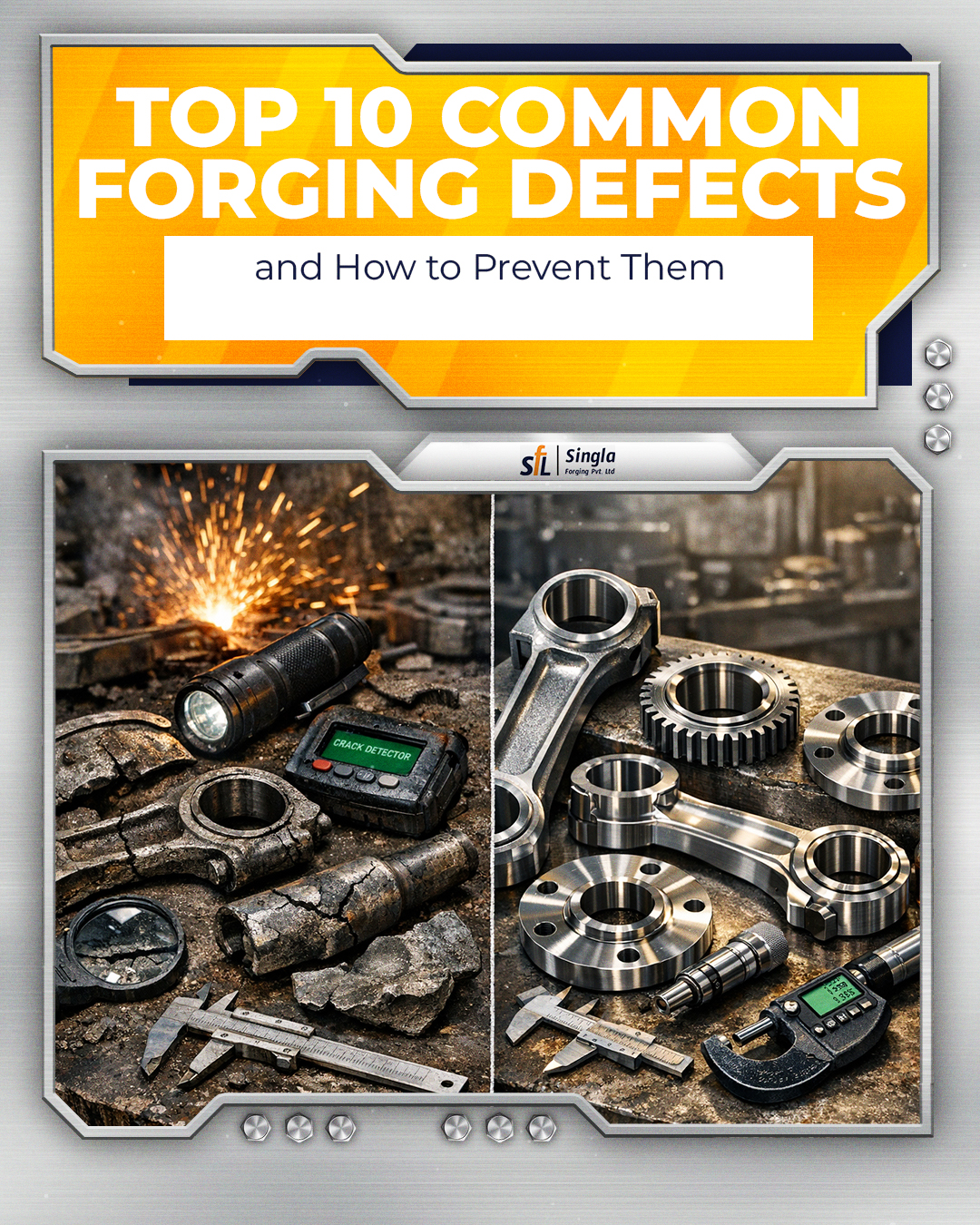
Forging is one of the most reliable manufacturing processes for producing strong and durable metal components. It improves mechanical properties, enhances grain structure, and creates parts capable of performing under extreme industrial conditions. However, like any manufacturing process, forging is not free from defects.
Forging defects can reduce product quality, affect performance, increase production costs, and even cause failure in critical applications. Identifying these defects early and understanding how to prevent them is essential for maintaining high standards in industrial manufacturing.
Here are the top 10 common forging defects and the best ways to prevent them.
1. Unfilled Section
This defect occurs when the metal does not completely fill the die cavity, leaving incomplete shapes or missing sections in the final product.
Prevention
Use proper billet size, maintain correct forging temperature, and ensure sufficient force is applied during the forging process.
2. Cold Shut
Cold shut appears as small cracks or lines on the surface caused when two metal flows meet but do not fuse properly.
Prevention
Improve die design, maintain correct metal flow, and ensure proper forging temperature to allow smooth material fusion.
3. Scale Pits
Scale pits are small surface depressions caused by oxide scale sticking to the workpiece during heating.
Prevention
Control furnace atmosphere, clean the billet surface properly, and avoid excessive heating that increases oxidation.
4. Die Shift
Die shift happens when the upper and lower dies are not properly aligned, causing dimensional inaccuracies in the forged part.
Prevention
Regularly inspect die alignment, use precision-guided equipment, and maintain tooling properly.
Control furnace atmosphere, clean the billet surface properly, and avoid excessive heating that increases oxidation.
5. Surface Cracks
Surface cracks usually occur due to excessive forging at low temperatures or improper cooling after forging.
Prevention
Maintain correct forging temperature, avoid overworking the material, and follow proper cooling procedures.
6. Internal Cracks
These cracks are not visible from the outside and often result from excessive stress, improper material flow, or poor forging techniques.
Prevention
Use controlled deformation rates, proper billet quality, and non-destructive testing methods for inspection.
7. Flakes
Flakes are internal ruptures caused by rapid cooling and hydrogen presence inside the forged material.
Prevention
Use proper heat treatment, controlled cooling, and high-quality raw materials with low hydrogen content.
8. Improper Grain Flow
Incorrect grain flow weakens the forged component and reduces fatigue resistance, especially in load-bearing applications.
Prevention
Design the forging process to align grain flow with the final component shape and use proper die design.
9. Laps and Folds
These defects occur when excess metal folds over itself during forging and creates weak surface layers.
Prevention
Ensure proper billet dimensions, optimize die design, and control metal flow during deformation.
10. Residual Stress
Residual stress remains inside the component after forging and may lead to distortion or cracking during machining or service.
Prevention
Apply proper post-forging heat treatment such as stress relieving, annealing, or normalizing.
Why Prevention Matters
Forging defects not only affect product quality but also lead to higher rejection rates, increased material waste, delayed production, and additional machining costs. In industries such as oil and gas, aerospace, marine, and heavy engineering, even minor defects can result in serious operational failures.
That is why strict process control, skilled workmanship, high-quality raw materials, and advanced inspection methods are essential for defect-free forging.
Conclusion
Forging delivers exceptional strength and reliability, but only when the process is carefully controlled. Understanding common forging defects and their prevention helps manufacturers improve product quality, reduce waste, and ensure long-term performance.
At Singla Forging, precision and quality are at the core of every forged component we produce. By following strict manufacturing standards and advanced quality control processes, we ensure durable, high-performance forgings that meet the demands of critical industrial applications.