The Lifecycle of a Forged Component in the Automotive Supply Chain
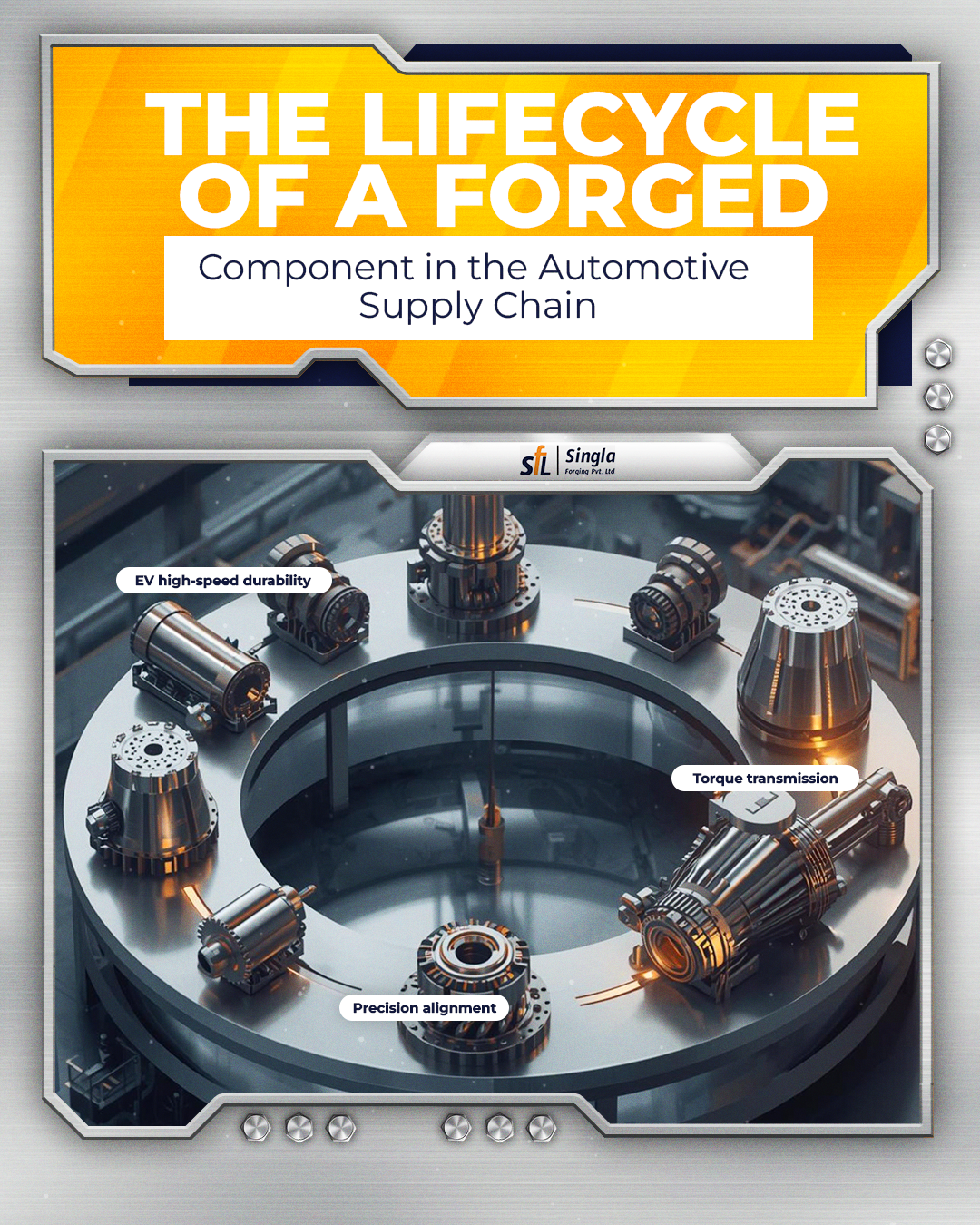
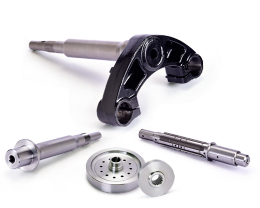
In the automotive industry, performance, reliability, and safety are non-negotiable. Behind every vehicle on the road today lies thousands of meticulously engineered parts — and among the most crucial of these are forged components. From connecting rods to steering knuckles, forged parts form the backbone of modern automotive systems thanks to their exceptional strength and durability.
At Singla Forging, we understand that manufacturing a high-quality forged component is not just about shaping metal — it’s about managing a complete lifecycle that ensures performance from raw material to end-of-life. Let’s walk through that lifecycle and explore how these essential components travel through the automotive supply chain.
1. Material Selection & Engineering Design
Every forged component starts on paper. Engineers collaborate with OEMs and Tier-1 suppliers to identify functional requirements — such as tensile strength, fatigue resistance, and dimensional precision. Material selection is critical: automotive forged parts are usually made from carbon steels, alloy steels, or specialty metal blends optimized for strength and longevity.
These early decisions impact the entire lifecycle, from forging performance to final component behavior under load.
2. Sourcing Raw Materials
Once the design is finalized, the next step is sourcing high-quality raw materials. Forging grade metals must meet strict chemical and mechanical specifications because they determine the component’s ability to withstand extreme stress and cyclical loads in engine, drivetrain, and suspension systems.
Reliable supply of these materials is essential; longer lead times or shortages can delay production and disrupt the automotive supply chain.
3. Forging & Primary Forming
Raw billets, rods, or bars are heated (for hot forging) or left at ambient temperature (for cold forging) and then shaped using controlled compressive forces. During forging:
- Metal grain flow is aligned with the part geometry, enhancing strength and fatigue resistance.
- Internal voids are eliminated, improving reliability and structural integrity.
4. Heat Treatment & Microstructure Optimization
After forming, parts often undergo heat treatment to enhance mechanical properties — including toughness, wear resistance, and dimensional stability. Proper heat treatment minimizes internal stresses and prepares the component for subsequent machining or finishing operations.
5. Precision Machining & Finishing
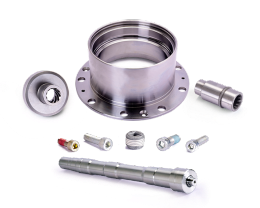
Forged parts rarely leave the factory straight from forging. Precision machining ensures that each component meets exact dimensional tolerances and surface quality required by automotive OEM standards. For example, threaded features, bores, or fine geometries are finished using CNC machines to achieve high accuracy.
Secondary processes may also include grinding, tapping, or surface hardening depending on the part’s function.
6. Quality Assurance & Testing
Quality checks are integrated throughout the lifecycle. Forged components undergo rigorous inspections — from dimensional measurement to nondestructive testing — to confirm performance and safety. Consistent quality is essential, especially for safety-critical parts like suspension joints and powertrain components.
Certifications and traceability documents assure customers that every component meets industry and regulatory standards.
7. Assembly, Packaging & Logistics
Once certified, components are carefully packaged and shipped to automotive assembly plants or Tier-1 suppliers. Packaging ensures protection during transit and often includes barcode tracking for efficient inventory management.
Efficient logistics are key, especially given the automotive industry’s just-in-time production practices.
8. Integration Into Vehicles
Forged components eventually reach the assembly line, where they become integral parts of engines, transmissions, suspension systems, and more. Their superior mechanical properties — including high tensile strength, impact resistance, and fatigue life — contribute directly to vehicle safety and performance.
9. In-Service Performance & Lifecycle Value
Once in service, forged parts deliver long life even under demanding conditions. Their robust manufacturing process — which refines internal grain and eliminates defects — allows vehicles to operate reliably over tens of thousands of miles with minimal maintenance.
This durability not only improves vehicle longevity but also reduces warranty costs and lifecycle expenses for manufacturers and end users alike.
10. End-of-Life & Recycling
At the end of a vehicle’s life, forged parts — typically made from recyclable metals — can be reclaimed and re-introduced into the raw material pool. This aligns with sustainability goals and contributes to a circular economy within the automotive sector.
Conclusion
Understanding the lifecycle of a forged component highlights just how much expertise, precision, and coordination goes into every part that keeps a vehicle moving. From raw material selection to final assembly and beyond, forging ensures strength, reliability, and performance at every stage.
At Singla Forging, we are proud to play a critical role in this lifecycle — delivering high-quality forged components that power vehicles around the world. Explore our range of capabilities and see how we can support your automotive manufacturing needs.