The Importance of Die Design in High-Performance Forgings
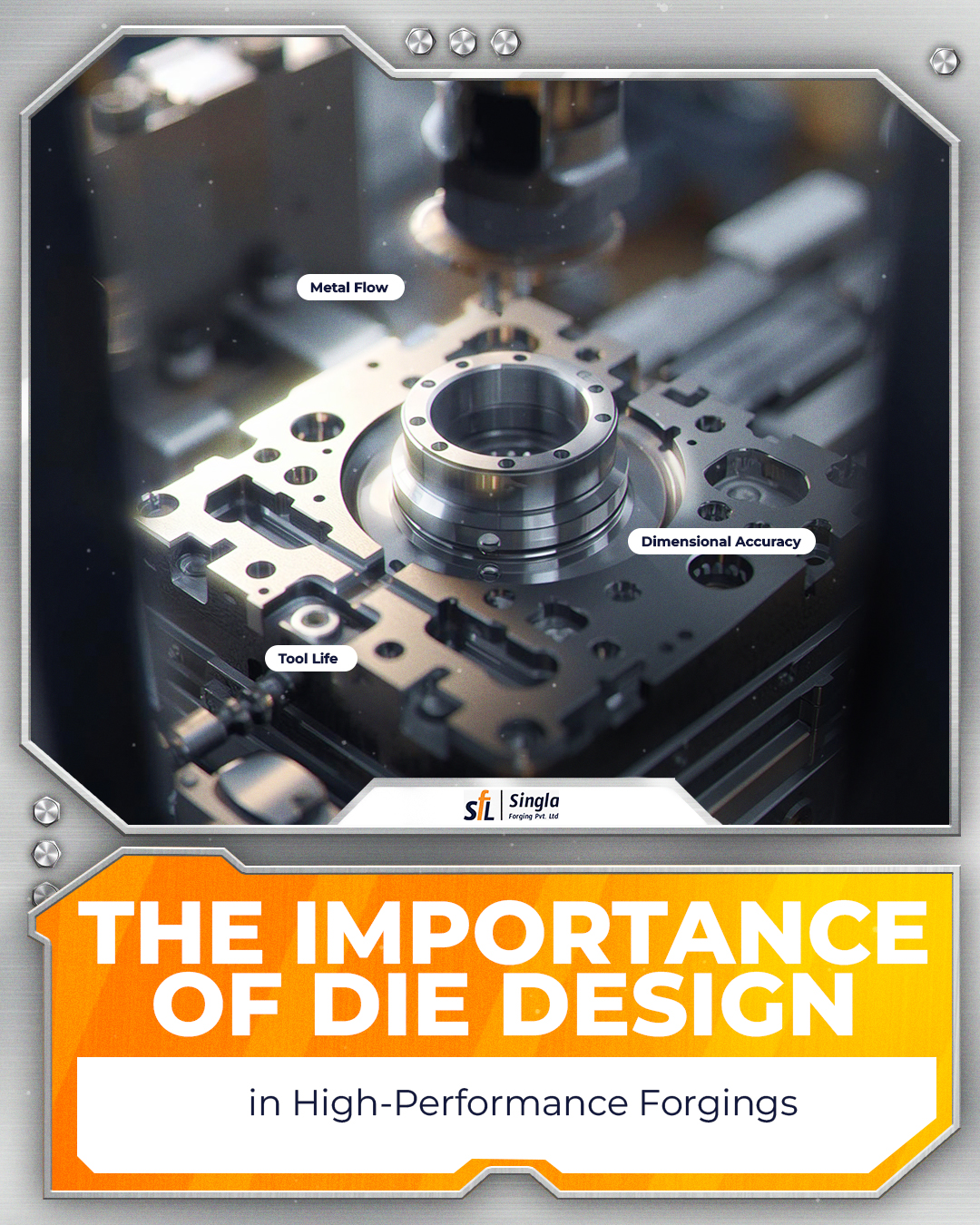
In the world of advanced manufacturing, high-performance forgings stand at the core of strength, durability, and precision. From aerospace components to automotive gears and heavy-duty industrial parts, the performance expectations placed on forged components are higher than ever. While material selection and process control are critical, one of the most influential yet often underappreciated factors in forging success is die design.
Understanding Die Design
At its core, die design refers to the conceptualization and engineering of dies — the specialized tools used to shape metal under pressure in the forging process. A well-designed die guides the material flow effectively to achieve the intended shape, internal structure, and mechanical properties.
Why Die Design Matters for High-Performance Forgings
1. Precision and Dimensional Accuracy
High-performance components require tight tolerances and complex geometries. A superior die design ensures that each forged part achieves precise dimensions and repeatability, reducing post-forging machining and wastage. This is especially crucial for industries like aerospace or defense, where even minor deviations can lead to failure.
2. Controlled Metal Flow and Mechanical Integrity
During forging, metal is forced to flow under extreme pressure. The die’s geometry determines how that flow happens. Optimized die designs help:
- Minimize internal defects such as laps, folds, or voids
- Enhance grain flow orientation for superior strength
- Produce components capable of withstanding high stress and fatigue
This control over metal flow directly translates into parts that are stronger, more reliable, and longer-lasting.
3. Increased Tool Life and Reduced Costs
Tooling is a significant investment in any forging operation. Poorly designed dies can cause uneven stress concentrations, leading to premature wear or failure. By contrast, a die crafted with careful analysis of load distribution and material behavior results in:
- Longer die life
- Fewer interruptions in production
- Lower tooling replacement costs
Over large volume production runs, these savings become substantial.
4. Enhanced Production Efficiency
The right die design minimizes forging defects and reduces the need for corrective actions downstream. This means:
- Less rejection and rework
- Faster production cycles
- Higher throughput
In competitive markets, efficiency is a differentiator — and die design is a driver.
5. Supporting Complex and Custom Designs
As industries push the boundaries of what’s possible, component geometries have become increasingly complex. Modern die design incorporates advanced simulation tools and CAD/CAM technologies that allow engineers to:
- Visualize metal flow before production
- Optimize flash and parting line placement
- Adapt quickly for custom or low-volume orders
This flexibility is essential in meeting customer demands without compromising quality.
Die Design and Advanced Simulation: A Winning Combination
Today’s leading forging houses, like Singla Forging, leverage sophisticated software to simulate forging processes long before a single die is manufactured. These tools evaluate:
- Temperature distribution
- Stress patterns
- Expected defects
By integrating simulation with die design, manufacturers can predict outcomes, prevent failures, and fine-tune processes with confidence.
Conclusion
Die design is far more than a technical step in the forging process — it is a strategic advantage. In high-performance forgings, where reliability and precision are non-negotiable, investing in smart, optimized die design pays dividends in performance, cost savings, and operational excellence.
At Singla Forging, we understand that forging quality starts long before the press hits the metal — it starts with exceptional die design.