Sustainable Forging: How AI Helps Reduce Energy and Material Waste
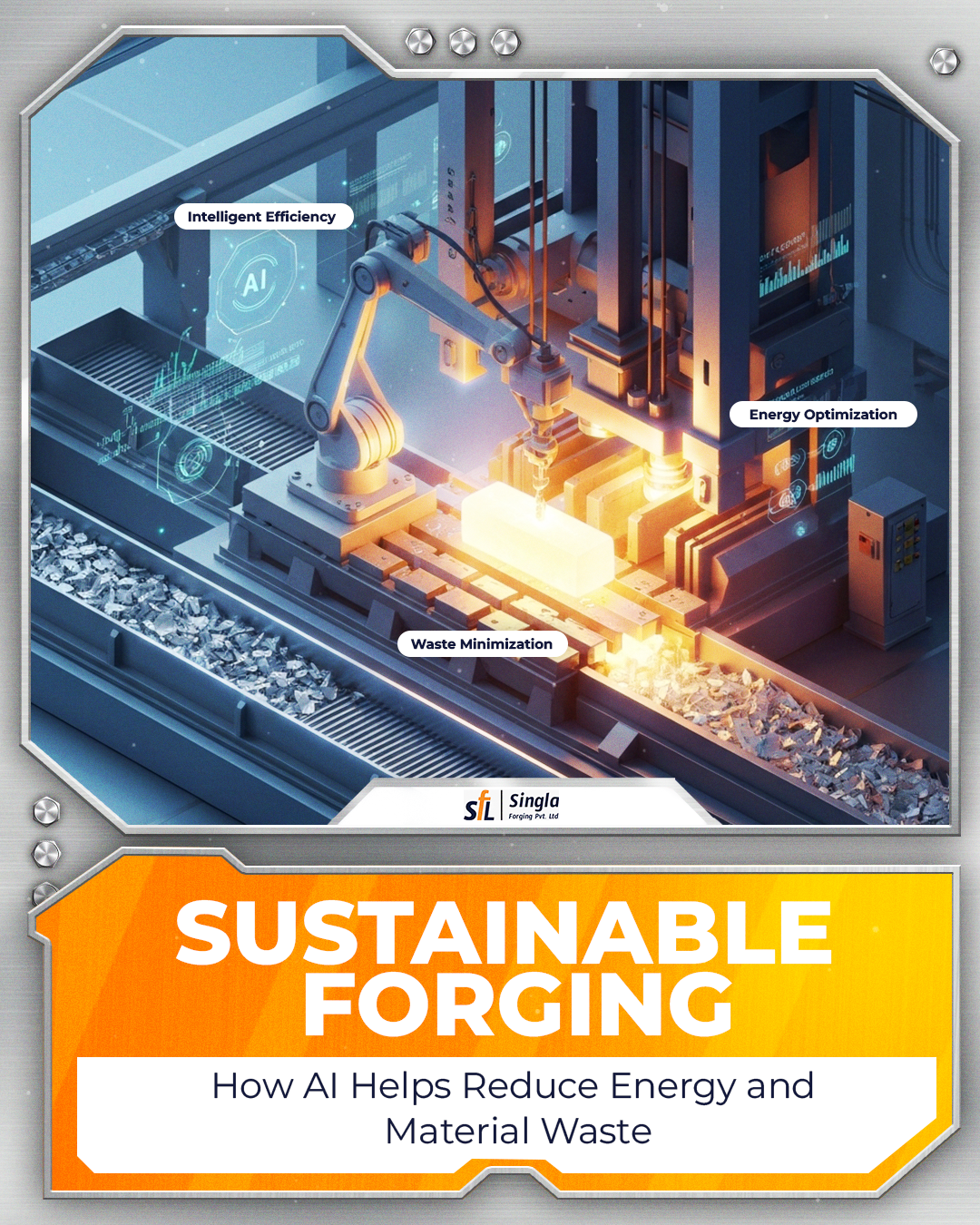
In today’s manufacturing landscape, sustainability is no longer optional—it is essential. The forging industry, known for its strength and durability, is also one of the most energy-intensive sectors. As global industries shift toward greener practices, Artificial Intelligence (AI) is emerging as a powerful tool to transform traditional forging into a smarter, more sustainable process.
At Singla Forging Pvt. Ltd., sustainability is already a core focus. By integrating modern technologies and process optimization, the company is taking significant steps toward reducing energy consumption and minimizing material waste.
This blog explores how AI is revolutionizing sustainable forging and helping manufacturers achieve higher efficiency with lower environmental impact.
The Sustainability Challenge in Forging
Forging involves heating metal to high temperatures and shaping it under pressure. While this process ensures superior strength and performance, it also comes with challenges:
- High energy consumption during heating and processing
- Material waste in the form of scrap, flash, and rejected components
- Emissions generated during heat treatment and finishing
Studies show that forging operations can be highly resource-intensive, making efficiency improvements critical for sustainability.
How AI is Transforming Sustainable Forging
Artificial Intelligence is enabling a shift from traditional, operator-dependent processes to data-driven, automated manufacturing systems. Here’s how AI contributes to reducing waste and energy usage:
1. Smart Temperature Control for Energy Efficiency
Heating is the most energy-consuming stage in forging. AI-powered systems can monitor and control furnace temperatures in real time, ensuring optimal heating conditions.
- Prevents overheating or underheating of billets
- Reduces energy loss during processing
- Maintains consistent product quality
AI-controlled forging systems can automatically regulate temperature, reducing scrap caused by incorrect heating and lowering overall energy consumption.
2. Reduction of Material Waste Through Precision
Material waste in forging often occurs due to improper shaping, excess trimming, or defective products. AI helps by:
- Optimizing billet size and shape before forging
- Predicting defects before they occur
- Improving die design and process accuracy
Advanced simulations and AI-driven design can significantly reduce unnecessary deformation and material usage, leading to less scrap generation.
3. Predictive Maintenance for Resource Optimization
Unexpected machine failures can lead to defective products and wasted materials. AI-based predictive maintenance systems:
- Monitor equipment health in real time
- Identify early indicators of equipment wear or failure
- Schedule maintenance before breakdowns occur
This not only reduces downtime but also prevents material loss caused by faulty operations.
4. AI-Driven Process Optimization
AI analyzes large volumes of production data to continuously improve forging operations. It can:
- Identify inefficiencies in production cycles
- Optimize press force, speed, and timing
- Recommend adjustments for better resource utilization
In some implementations, AI has been shown to reduce scrap rates significantly—sometimes by up to 50% in critical processes.
5. Supporting Circular Manufacturing
Sustainability in forging also depends on recycling and reuse. AI supports circular manufacturing by:
- Tracking material flow across production
- Improving scrap collection and recycling efficiency
- Optimizing the use of recycled metals
Recycling steel requires far less energy than producing new material, making it a key factor in reducing environmental impact.
The Role of Industry 4.0 in Green Forging
AI is a core component of Industry 4.0, where connected systems, IoT sensors, and automation work together to create intelligent factories.
In forging, this means:
- Real-time monitoring of energy usage
- Automated decision-making for process improvements
- Seamless integration of sustainability into production
The combination of AI and digital technologies is paving the way for net-zero manufacturing and smarter supply chains.
Singla Forging’s Commitment to Sustainability
Singla Forging is already embracing many principles that align with AI-driven sustainability:
- Energy-efficient machinery to reduce power consumption
- Precision engineering to minimize raw material waste
- Recycling systems to reuse scrap materials
- Optimized production processes to avoid unnecessary losses
These initiatives demonstrate how traditional forging expertise can evolve with modern technology to create a more sustainable future.
Benefits of AI in Sustainable Forging
Implementing AI in forging operations offers multiple advantages:
- Reduced energy consumption through optimized heating and processes
- Lower material waste with precision manufacturing
- Improved product quality and consistency
- Cost savings from efficient resource utilization
- Reduced carbon footprint and environmental impact
The Future of Forging is Smart and Sustainable
As environmental regulations tighten and industries demand greener supply chains, AI will play an increasingly critical role in forging.
The future lies in:
- Fully automated forging lines
- AI-powered digital twins for simulation and optimization
- Carbon-neutral manufacturing facilities
Companies that adopt AI-driven sustainability today will not only reduce their environmental impact but also gain a strong competitive advantage.
Conclusion
Sustainable forging is no longer just about reducing waste—it’s about reimagining the entire manufacturing process. With AI, forging companies can achieve higher efficiency, lower costs, and a significantly reduced environmental footprint.
At Singla Forging, the journey toward sustainability is already underway. By combining traditional expertise with advanced technologies like AI, the company is shaping a future where performance and sustainability go hand in hand.