Quality Assurance in Forging: Best Practices and Emerging Standards
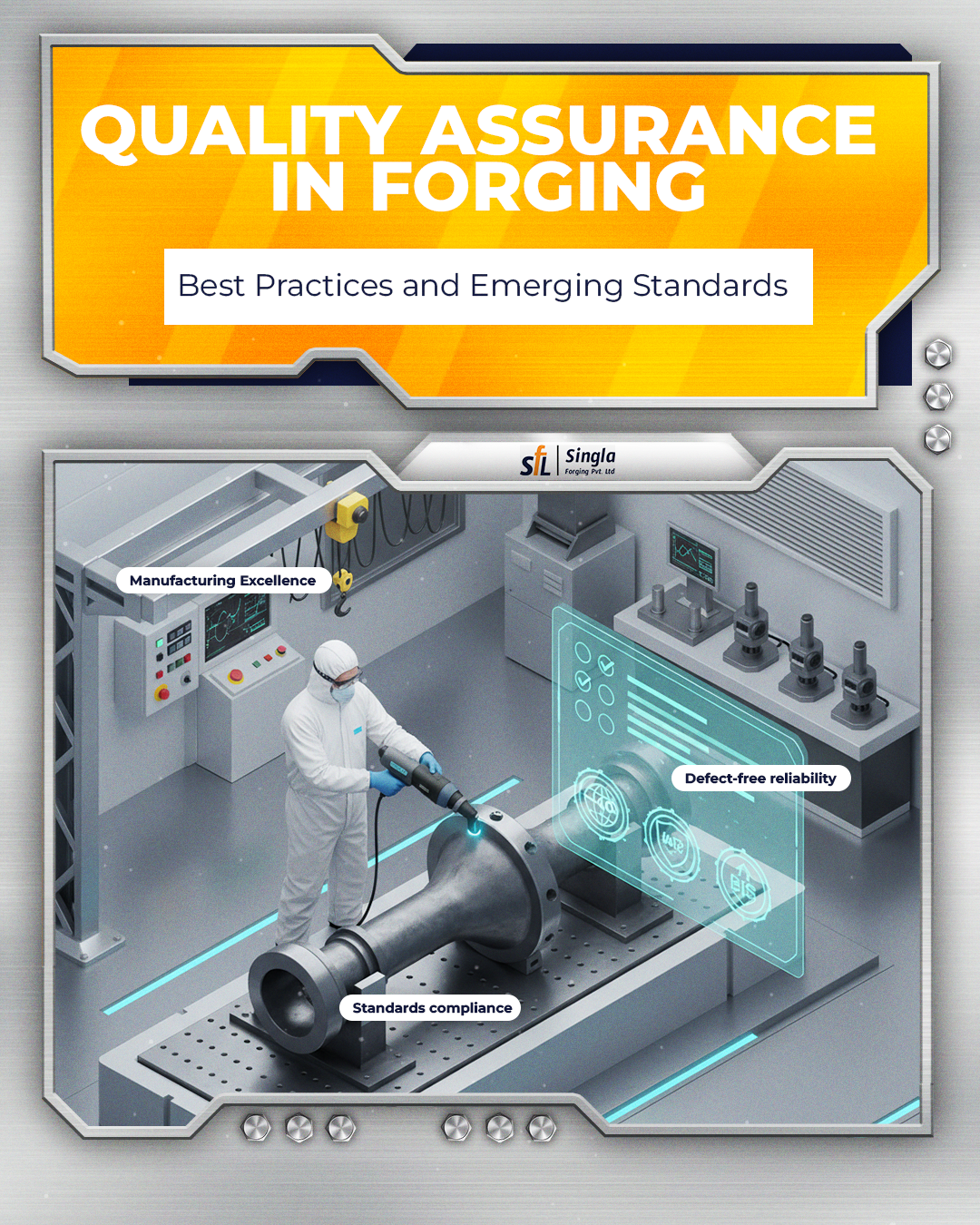
In the forging industry, quality assurance (QA) is not just a checkpoint at the end of production—it is an integrated discipline that spans design, material selection, process control, and final inspection. As forged components are widely used in critical sectors such as automotive, aerospace, construction, and energy, even minor defects can lead to serious performance and safety issues. This makes a robust quality assurance framework essential for manufacturers striving to remain competitive and compliant in a rapidly evolving market.
Understanding Quality Assurance in Forging
Quality assurance in forging refers to the systematic processes used to ensure that forged components meet specified mechanical, dimensional, and metallurgical requirements. Unlike quality control, which focuses on detecting defects, QA emphasizes preventing defects by controlling variables throughout the forging lifecycle. This proactive approach improves consistency, reduces rework, and enhances customer confidence.
Best Practices in Forging Quality Assurance
1. Raw Material Verification
Quality begins with the raw material. Verifying chemical composition, cleanliness, and traceability of billets or ingots is critical. Material certification and incoming inspection help ensure that only approved grades are used, minimizing the risk of internal defects or unexpected mechanical behavior.
2. Process Design and Simulation
Modern forging operations increasingly rely on process simulation tools to predict material flow, die filling, and potential defect zones. These simulations allow engineers to optimize die design and forging parameters before production begins, significantly reducing trial-and-error costs and quality issues.
3. Controlled Heating and Temperature Monitoring
Improper heating can lead to grain growth, oxidation, or cracking. Best practices include using calibrated furnaces, uniform heating cycles, and real-time temperature monitoring. Maintaining precise temperature ranges ensures consistent microstructures and mechanical properties.
4. Tooling and Die Management
Worn or damaged dies are a common source of dimensional inaccuracies and surface defects. Regular inspection, preventive maintenance, and controlled die life management are essential QA measures that directly impact product consistency.
5. In-Process Inspection and Statistical Control
Implementing in-process inspections helps detect deviations early. Statistical Process Control (SPC) techniques, such as control charts, allow manufacturers to monitor process stability and take corrective action before defects occur.
6. Non-Destructive and Destructive Testing
Forged components often undergo non-destructive testing (NDT) methods like ultrasonic testing, magnetic particle inspection, or dye penetrant testing to detect internal or surface flaws. Destructive tests, including tensile, impact, and hardness testing, validate mechanical performance and compliance with specifications.
Emerging Standards Shaping the Forging Industry
1. Increased Adoption of International Standards
Global supply chains are driving the adoption of internationally recognized standards such as ISO 9001 for quality management systems and IATF 16949 for automotive forging suppliers. These standards emphasize risk-based thinking, traceability, and continuous improvement.
2. Digital Quality Management Systems
Digitalization is transforming QA practices in forging. Advanced Quality Management Systems (QMS) integrate data from production, inspection, and testing into centralized platforms. This enables real-time monitoring, faster root cause analysis, and data-driven decision-making.
3. Industry 4.0 and Smart Forging
The integration of sensors, automation, and data analytics is enabling predictive quality assurance. Smart forging systems can detect anomalies in force, temperature, or vibration patterns, allowing manufacturers to predict defects before they occur.
4. Sustainability and Compliance Requirements
Emerging standards increasingly consider environmental and sustainability factors. Energy-efficient processes, waste reduction, and responsible sourcing are becoming part of quality audits, especially for customers in regulated industries.
5. Enhanced Traceability and Documentation
Customers now expect complete traceability—from raw material to finished component. Advanced marking, digital records, and blockchain-based traceability systems are emerging as tools to strengthen accountability and compliance.
The Future of Quality Assurance in Forging
As forging applications become more demanding, quality assurance will continue to evolve from a compliance-driven function to a strategic advantage. Manufacturers that invest in advanced QA practices, embrace digital tools, and align with emerging standards will be better positioned to deliver reliable, high-performance components while reducing costs and risks.
In an industry where strength, durability, and precision are non-negotiable, effective quality assurance is not optional—it is the foundation of long-term success.