Predictive Maintenance in Forging: Reducing Downtime with AI
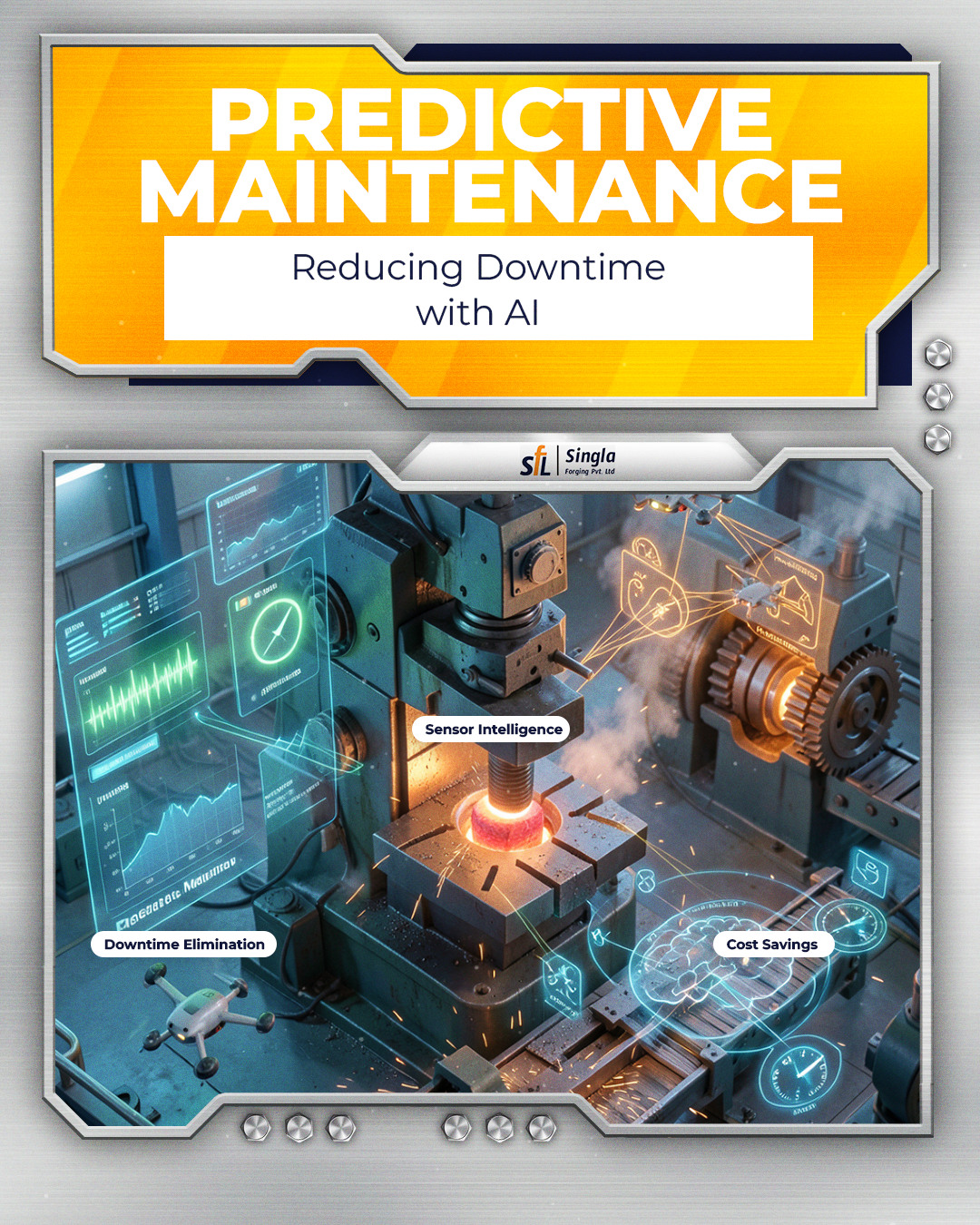
In the fast-paced world of modern manufacturing, forging operations have to deliver precision, consistency, and reliability. For equipment-intensive processes like forging, unplanned downtime not only delays production but significantly increases operational costs and impacts delivery schedules. This is where predictive maintenance powered by Artificial Intelligence (AI) is transforming the forging industry.
At Singla Forging, we understand that maximizing uptime and ensuring the longevity of critical machinery are key drivers of operational excellence. Predictive maintenance is quickly emerging as a strategic advantage for forging plants looking to optimize performance and reduce unforeseen failures.
What Is Predictive Maintenance?
Predictive maintenance uses data from sensors, machines, and production systems to anticipate equipment failures before they happen. Unlike traditional maintenance strategies — such as reactive maintenance (fixing after failure) or scheduled maintenance (fixing at set intervals) — AI-driven predictive maintenance identifies patterns and signals that indicate impending problems.
This leads to smarter, data-backed decisions about when and how maintenance should be carried out.
Why Predictive Maintenance Matters in Forging
Forging plants are built around heavy machinery — hammers, presses, furnaces, conveyors — all operating under extreme conditions of heat, pressure, and vibration. These machines are subjected to wear and tear, and even small failures can ripple into major production setbacks.
Traditional maintenance methods often result in one of two outcomes:
- Over-maintenance : replacing or servicing components that still had useful life, wasting time and resources.
- Under-maintenance : failing to catch wear-related issues in time, leading to unexpected breakdowns.
Predictive maintenance remedies both concerns by evaluating real-time machine data, reducing downtime and extending equipment lifespan.
How AI Powers Predictive Maintenance
AI enhances predictive maintenance through:
Real-Time Sensor Monitoring
Sensors collect data on vibration, temperature, pressure, and other key indicators from forging equipment. AI models analyze these scores continuously to detect anomalies.
Machine Learning Models
Machine learning algorithms train on historical data to identify patterns that correlate with failures. Over time, these models get smarter and more accurate.
Failure Forecasting
Instead of reacting to faults, AI forecasts failures days or even weeks in advance. This early warning allows maintenance teams to plan and execute repairs at convenient times — not in the middle of a critical production run.
Benefits of Predictive Maintenance in Forging
Implementing predictive maintenance translates into measurable business advantages:
- Reduced Unplanned Downtime
By detecting early signs of wear, AI helps prevent catastrophic failures that halt production. - Lower Maintenance Costs
Maintenance is performed only when needed — not too early and not too late — saving labor, parts, and service expenses. - Improved Safety
Predictive systems reduce the chances of sudden breakdowns that can endanger plant personnel. - Increased Machine Lifecycle
Early fault detection prevents excessive wear, helping equipment perform longer and more reliably. - Enhanced Productivity
Scheduled maintenance windows can be synced with production schedules, minimizing interruptions and maximizing output.
Practical Implementation Steps
If forging operations plan to adopt predictive maintenance, a structured strategy is key:
- Sensor Installation: Deploy smart sensors on critical machinery to collect relevant data.
- Connectivity & Data Storage: Use secure IoT networks and cloud storage to handle the inflow of machine insights.
- AI & Analytics Platform: Implement an advanced analytics solution that interprets machine data and delivers real-time fault notifications.
- Maintenance Workflows: Align maintenance planning with AI predictions to streamline action.
- Continuous Improvement: Refine AI models using ongoing production and maintenance data.
Challenges & Solutions
While the benefits are clear, some forging plants hesitate due to challenges like:
- Initial investment costs
- Legacy equipment integration
- Data quality concerns
However, the long-term return on investment — through reduced downtime, lower risk, and improved performance — far outweighs these challenges. Partnering with experienced industrial AI providers and investing in scalable sensor and analytics infrastructure can significantly ease the transition.
Conclusion
Predictive maintenance powered by AI is no longer a future concept — it’s a practical, high-impact tool for forging manufacturers striving for operational excellence. By minimizing unplanned downtime, optimizing maintenance schedules, and enabling smarter decisions, predictive maintenance helps forge a more reliable, productive, and efficient manufacturing environment.
At Singla Forging, we believe in harnessing cutting-edge technologies to bring greater value to our clients and partners. Predictive maintenance is a critical step in future-ready forging operations — and the companies that adopt it early will lead the industry in efficiency, quality, and competitiveness.