India as a Global Auto Component Sourcing Hub: What Buyers Should Know
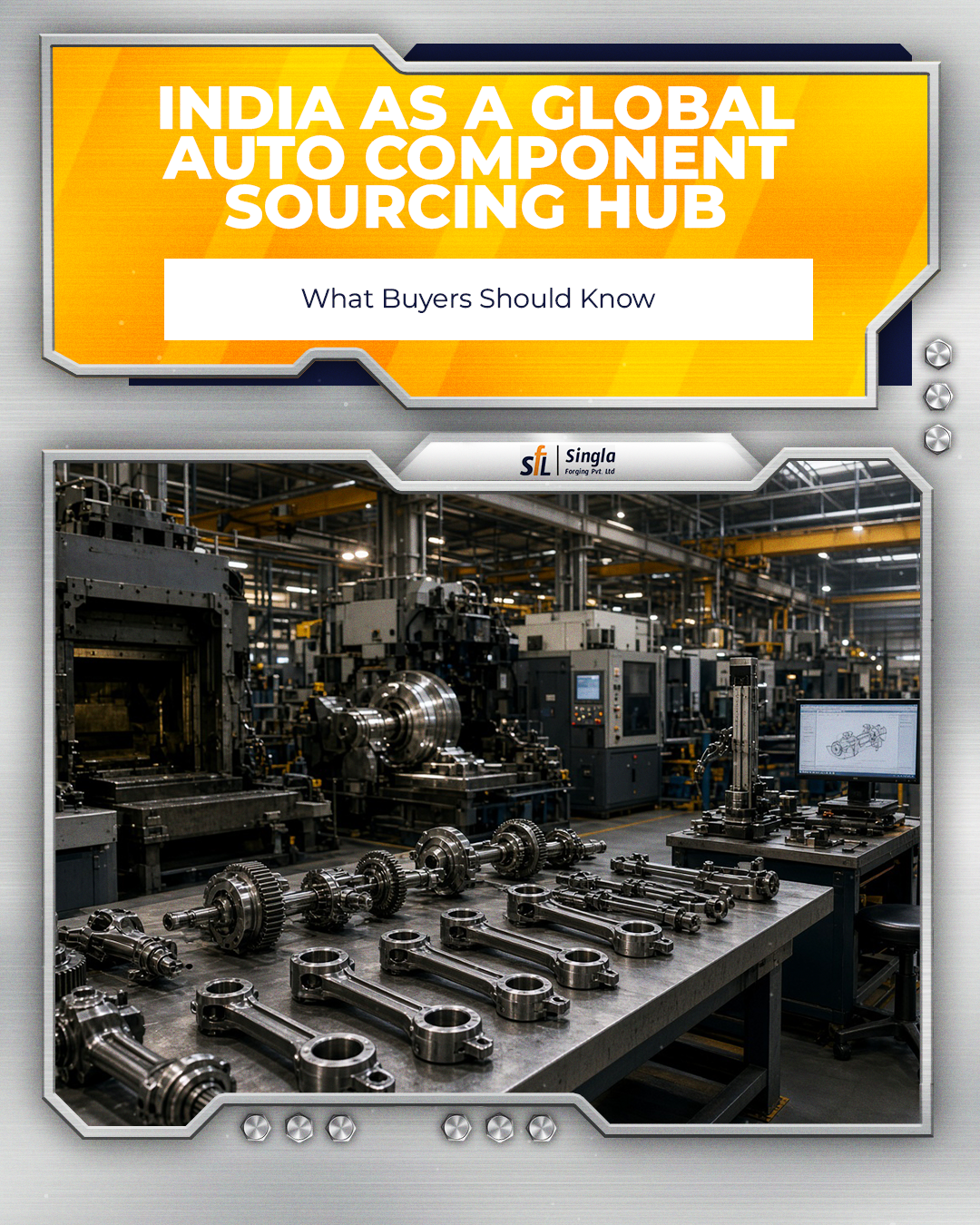
The global automotive supply chain is changing rapidly. Vehicle manufacturers and component buyers are looking beyond traditional sourcing markets to build supply chains that offer competitive pricing, reliable quality, manufacturing expertise, and long-term scalability. In this changing environment, India is becoming an increasingly important destination for automotive component sourcing.
India already has a large and established automotive manufacturing ecosystem, supported by component manufacturers, steel producers, engineering companies, tooling suppliers, and a skilled industrial workforce. According to the Automotive Component Manufacturers Association of India (ACMA), India's auto component exports reached US$22.9 billion in FY2024–25, an 8% increase from the previous year.
For international buyers considering India as part of their sourcing strategy, understanding the country's capabilities and supplier expectations is essential.
A Strong and Expanding Automotive Manufacturing Base
India's automotive component industry is no longer limited to supplying the domestic market. Indian manufacturers serve OEMs, Tier-1 suppliers, aftermarket businesses, and international customers across multiple regions.
The industry's export portfolio includes engine components, transmission and steering parts, suspension and braking components, body and chassis parts, electrical components, and other engineered products. In FY2024–25, North America accounted for around 32% of India's component exports, while Europe represented approximately 29.5%.
This international exposure has encouraged manufacturers to improve production systems, quality controls, documentation, and delivery processes.
For buyers, this means India can be considered not simply as a low-cost manufacturing location, but as part of a broader global sourcing strategy.
Cost Efficiency Without Ignoring Engineering Requirements
Cost remains an important factor when selecting an international supplier. India's manufacturing ecosystem can offer competitive production economics due to its workforce, engineering capabilities, established steel industry, and growing manufacturing infrastructure.
However, automotive sourcing cannot be based on price alone. A lower component price has little value if it results in inconsistent dimensions, premature failure, excessive rejection rates, or delivery problems.
For this reason, buyers should evaluate the total cost of sourcing, including material quality, tooling, inspection, packaging, logistics, rejection rates, and supplier communication.
The objective should be to identify suppliers capable of delivering consistent components at a commercially sustainable cost.
Why Forging Matters in Automotive Components
Forging is particularly important for applications where strength, durability, and structural reliability are critical. The process can produce components capable of handling demanding mechanical loads and repeated stresses.
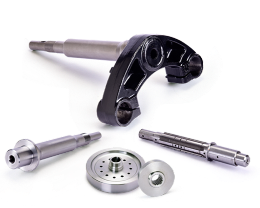
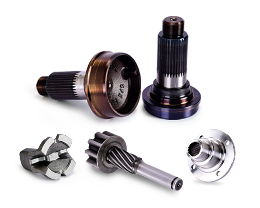
For automotive buyers, forged components may be used in applications involving steering, suspension, drivetrain, transmission, chassis, and other load-bearing systems.
India's established metalworking and engineering ecosystem gives international buyers access to manufacturers with experience in producing components for demanding industrial applications.
When evaluating a forging supplier, buyers should look beyond the manufacturing process itself. Material traceability, die design, heat treatment, dimensional inspection, testing capabilities, and process consistency all deserve careful consideration.
Quality Should Be the First Sourcing Conversation
International automotive sourcing requires a clear understanding of quality expectations.
Before placing an order, buyers should discuss:
- Required material grades and specifications
- Applicable international or customer standards
- Dimensional tolerances
- Heat-treatment requirements
- Surface-finish expectations
- Mechanical and metallurgical testing
- Inspection procedures
- Material traceability
- Packaging and identification
- Documentation and certificates
A capable supplier should be able to explain how quality is controlled from incoming raw material through forging, heat treatment, machining where applicable, inspection, and final dispatch.
For overseas buyers, documentation is equally important. Clear inspection reports, material certificates, batch identification, and traceability can make supplier coordination significantly easier.
Production Capacity and Scalability Matter
A supplier may successfully manufacture a small trial batch, but that does not automatically mean it can support a long-term automotive program.
Buyers should therefore assess production capacity before finalising a supplier. Important questions include:
- What is the available forging capacity?
- Can production volumes increase when required?
- What tooling capabilities are available?
- How is preventive maintenance managed?
- What inspection equipment is available?
- Can the supplier maintain consistent quality across larger batches?
ACMA currently represents more than 1,100 auto-component manufacturers, demonstrating the breadth of India's component manufacturing ecosystem.
Communication and Supply-Chain Reliability
Successful international sourcing depends on more than manufacturing capability. Communication plays an equally important role.
Buyers should establish clear processes for technical drawings, revisions, purchase orders, quality approvals, production updates, inspection documentation, and shipment schedules.
Time-zone differences and international logistics can create challenges, so a supplier with organised communication and documentation processes can make ongoing cooperation easier.
It is also useful to discuss packaging requirements and shipping arrangements before production begins. Automotive components often require specific protection against corrosion, impact, contamination, and handling damage during transportation.
What Global Buyers Should Check Before Choosing an Indian Supplier
A practical supplier evaluation should cover several areas rather than focusing on one factor.
- Manufacturing capability: Confirm that the supplier has the equipment and technical expertise required for the component.
- Quality systems: Review inspection processes, testing facilities, certifications, and traceability systems.
- Material sourcing: Understand where raw materials are sourced and how material quality is verified.
- Production capacity: Ensure the supplier can handle both current requirements and potential volume increases.
- Technical support: Evaluate the supplier's ability to understand drawings, tolerances, specifications, and engineering changes.
- Delivery performance: Discuss lead times, production planning, packaging, and export logistics.
- Long-term scalability: Consider whether the manufacturer can support your business as volumes and product requirements evolve.
India's Role in the Future of Automotive Sourcing
India's position in the global auto component market is continuing to develop. ACMA's recent industry research identifies India's cost competitiveness, skilled workforce, domestic demand, and expanding export opportunities as important factors behind the industry's growth.
At the same time, global buyers should recognise that sourcing from India still requires proper supplier qualification. Advanced components, evolving vehicle technologies, sustainability requirements, and international trade conditions are raising expectations across the industry.
For companies looking for forged automotive components, the right approach is therefore to combine competitive manufacturing economics with engineering capability, consistent quality, transparent communication, and dependable delivery.
India offers a broad manufacturing ecosystem that can support these requirements. For buyers willing to evaluate suppliers carefully and build long-term partnerships, the country can form an important part of a diversified global automotive sourcing strategy.
Singla Forging can support buyers looking for quality-focused forged components manufactured for demanding automotive and industrial applications. For businesses exploring component sourcing from India, evaluating the right manufacturing partner is the first step toward building a reliable and scalable supply chain.