How Automation Is Reducing Human Error in Forging Processes
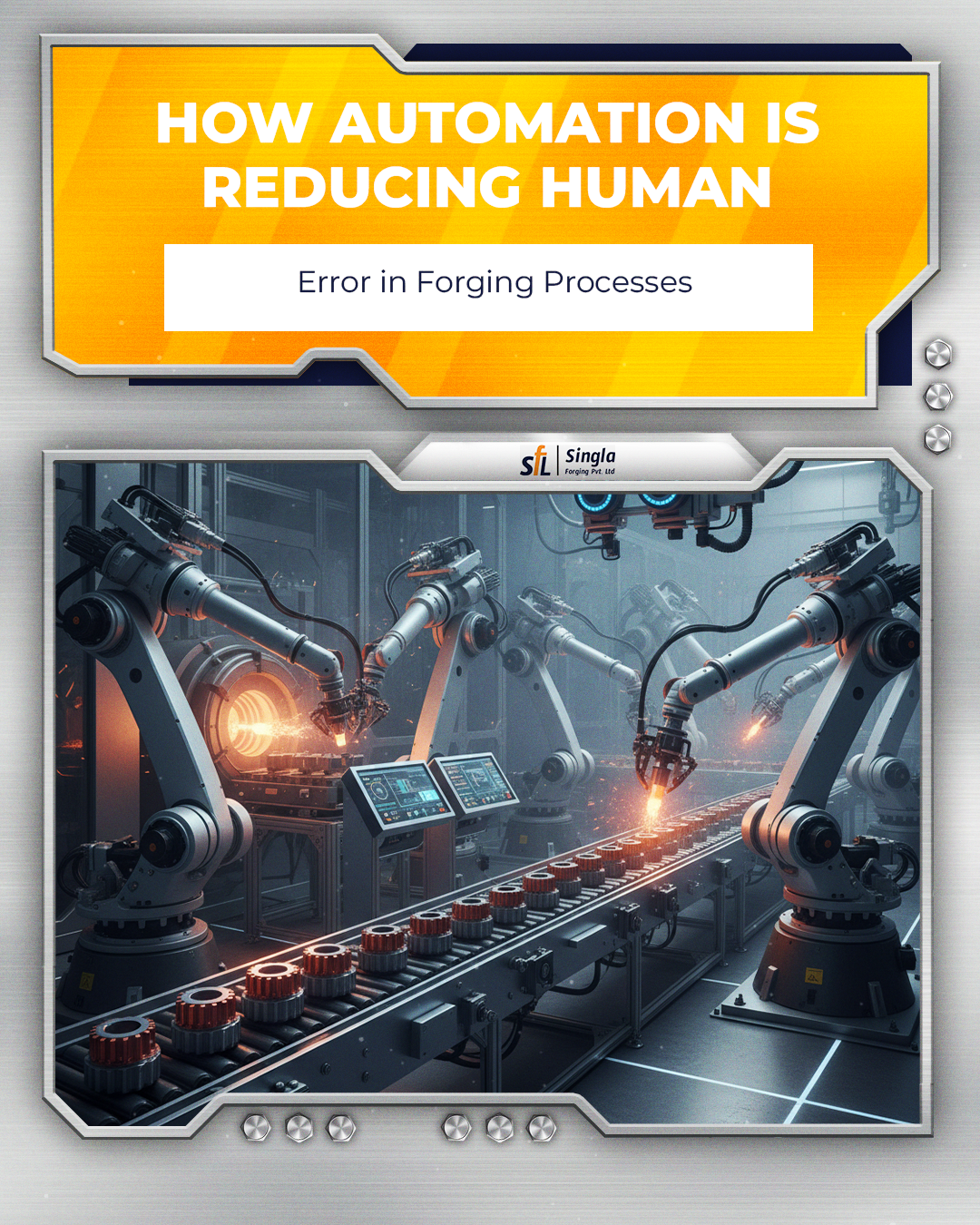
In the forging industry, precision is not optional. Even a minor operational mistake can lead to defective components, material wastage, production delays, or safety risks. Traditional forging operations have long depended on manual handling, operator judgment, and repetitive human intervention. While skilled workers remain essential, manual processes naturally increase the possibility of inconsistencies and errors.
Today, automation is transforming modern forging plants by minimizing these risks. From automated material handling systems to AI-driven quality inspection tools, forging manufacturers are adopting advanced technologies to improve consistency, accuracy, and operational reliability. Automation is not replacing expertise — it is enhancing it.
Understanding Human Error in Forging Operations
Human error in forging can occur at multiple stages of production. Common examples include:
Incorrect billet temperature settings
These issues can result in cracks, dimensional inaccuracies, reduced mechanical strength, and rejected parts. In industries such as automotive, aerospace, railways, and heavy engineering, such defects can have serious consequences.
Automation addresses these challenges by reducing dependence on manual decision-making in critical production areas.
Automated Temperature Control Improves Accuracy
Temperature control is one of the most critical factors in forging. Overheating or underheating billets can affect grain structure, mechanical properties, and final product quality.
Modern automated forging systems use sensors and programmable controls to maintain precise heating conditions. Infrared temperature monitoring systems continuously track billet temperatures and adjust furnace operations in real time.
Robotics Enhances Material Handling Safety and Precision
Manual handling of heated metal components is both risky and inconsistent. Human fatigue, reaction time, and handling variations can affect positioning accuracy during forging operations.
Robotic automation systems now perform repetitive handling tasks with high precision. Automated arms and manipulators transfer billets between furnaces, presses, trimming stations, and cooling systems without interruption.
Key benefits include:
Accurate positioning of workpieces
By eliminating manual handling inconsistencies, forging plants significantly reduce operational errors.
CNC and Automated Press Controls Ensure Consistency
Traditional forging presses often relied heavily on operator experience to control pressure, stroke length, and timing. This created variations between batches and shifts.
Modern CNC-controlled forging presses use programmed parameters to maintain exact force application and movement accuracy throughout production.
These systems automatically regulate:
Press force
Because every cycle follows the same programmed instructions, manufacturers achieve highly consistent output with minimal process variation.
Real-Time Monitoring Reduces Production Defects
Advanced automation systems now include real-time process monitoring technologies. Sensors installed across forging equipment continuously collect production data such as pressure, vibration, temperature, and machine performance.
If abnormal conditions are detected, automated alerts notify operators immediately or stop the process before defective components are produced.
This proactive monitoring helps prevent:
Equipment failure
Instead of discovering problems during final inspection, manufacturers can identify and correct issues instantly.
Automated Quality Inspection Improves Defect Detection
Manual inspection processes can overlook minor surface cracks, dimensional variations, or structural defects, especially during high-volume production.
Automated inspection systems using machine vision, laser scanning, and AI-based defect detection provide more accurate and reliable quality checks.
These technologies can:
Detect microscopic surface defects
Automated inspection not only improves quality assurance but also minimizes dependency on subjective human judgment.
Data Integration Supports Better Decision-Making
Modern forging plants increasingly use integrated manufacturing software systems that connect machines, operators, and production data in a centralized environment.
Automation platforms collect and analyze operational data to optimize production efficiency and identify recurring error patterns.
This allows manufacturers to:
Improve process planning
Optimize material usage
Data-driven operations reduce guesswork and help management make more informed decisions.
Human Expertise Still Remains Essential
While automation significantly reduces human error, skilled professionals remain vital to forging operations. Engineers, technicians, and machine operators are still responsible for process design, system supervision, maintenance, and quality strategy.
Automation works best when combined with experienced human oversight. Instead of replacing workers, it enables them to focus on higher-value responsibilities that require technical knowledge and problem-solving skills.
Conclusion
Automation is reshaping the forging industry by improving precision, consistency, safety, and efficiency. By reducing manual intervention in critical processes, manufacturers can minimize human error and produce higher-quality forged components with greater reliability.
From robotic handling systems and CNC-controlled presses to AI-powered inspection technologies, automation is helping forging plants meet growing industry demands while maintaining strict quality standards.
As forging technology continues to evolve, companies that invest in intelligent automation will be better positioned to improve productivity, reduce operational risks, and stay competitive in modern manufacturing markets.