Energy Efficiency in Forging: Induction Heating and Other Ways to Cut Energy Use
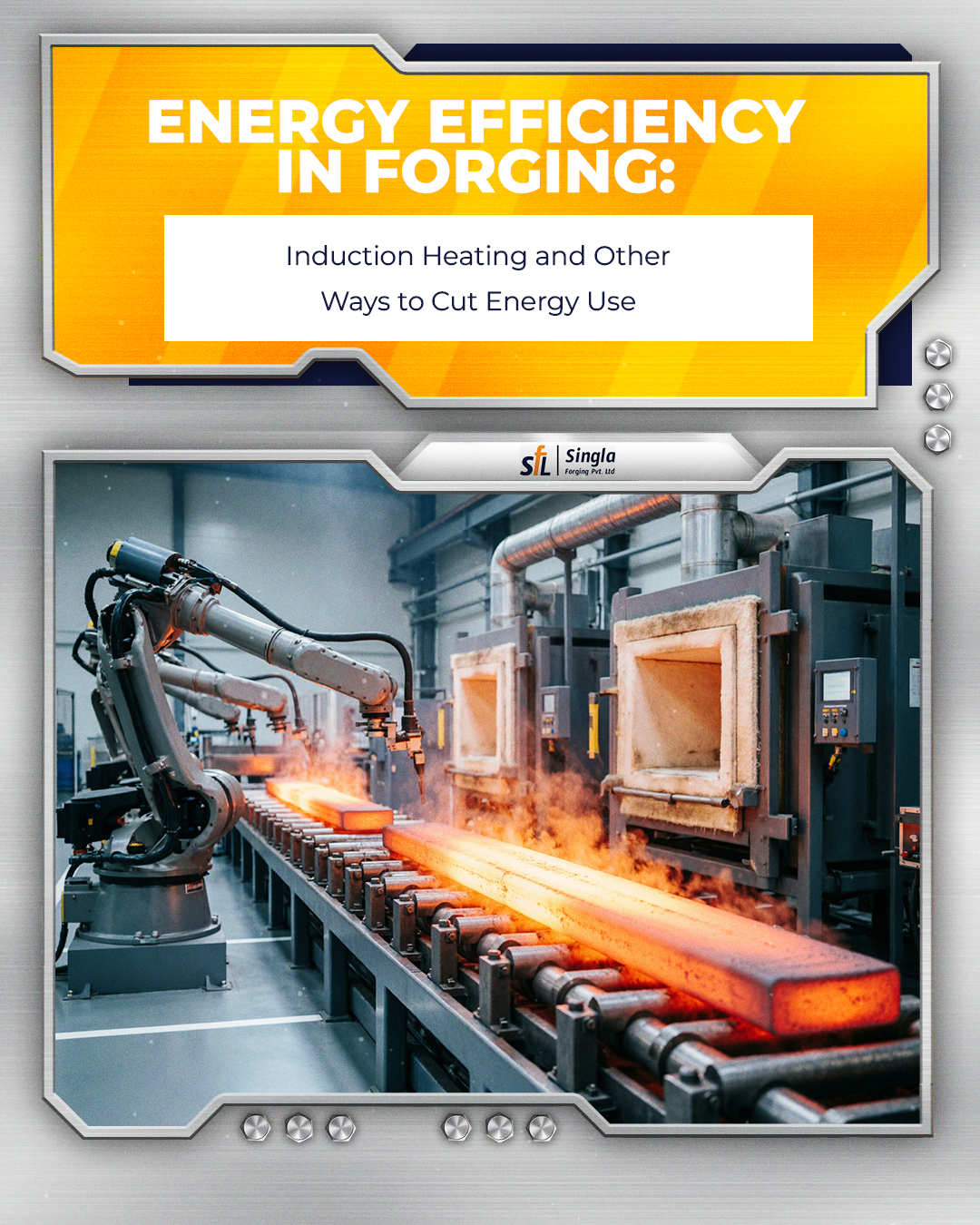
Energy efficiency is becoming an increasingly important part of modern forging operations. Forging requires substantial heat and mechanical force, and the energy used for heating, forging, heat treatment, machining, and supporting equipment can significantly influence production costs. In fact, industry studies indicate that metal reheating can account for a substantial share of total energy consumption in forging facilities.
For manufacturers supplying automotive, industrial, agricultural, and engineering components, improving energy efficiency is not simply about reducing electricity or fuel bills. It can also support consistent production, lower material losses, reduce emissions, and improve overall manufacturing performance.
Why Energy Efficiency Matters in Forging
Forging involves several energy-intensive stages. Billets or bars may need to be heated to high temperatures before forming, while heat treatment requires additional thermal energy. Forging presses, hammers, CNC machines, compressors, cooling systems, and other equipment also contribute to overall consumption.
The heating stage deserves particular attention. According to the Bureau of Energy Efficiency's forging-sector energy mapping, reheating can represent around 30–70% of energy consumption in forging operations. The same report identifies equipment selection, automation, and improved operating practices as important opportunities for energy savings.
This makes efficient heating technology one of the most practical areas for reducing energy use.
Induction Heating: A More Efficient Approach
Induction heating is increasingly used for heating billets before forging. Unlike conventional fuel-fired furnaces, which transfer heat through a heated atmosphere, induction systems generate heat within the electrically conductive workpiece using electromagnetic energy.
This provides several potential efficiency advantages. The heating process is rapid, temperature control can be precise, and energy can be supplied when required rather than continuously maintaining a large furnace volume at high temperature.
Technical assessments of hot forging have found that inductive heating can require considerably less energy than gas-fired heating for bringing steel to forging temperatures, although actual consumption depends on material, billet geometry, equipment, production rate, and process conditions.
Induction heating can also reduce unnecessary scaling and improve temperature consistency, helping manufacturers maintain reliable forging quality.
Optimize Heating Parameters
Simply installing an induction heating system does not automatically guarantee maximum energy efficiency. The system must be correctly matched to the component and production process.
Important factors include:
- Billet diameter and length
- Material grade
- Target forging temperature
- Heating rate
Research into induction heating for automotive crankshaft forging found that optimizing process parameters and reducing heat losses around heating zones could produce measurable energy savings.
For manufacturers, this means energy efficiency should be treated as a process-engineering objective rather than simply an equipment upgrade.
Reduce Heat Loss
Heat loss is another major source of unnecessary energy consumption. Furnaces, transfer areas, dies, and heating systems can lose energy through radiation, convection, and conduction.
Better insulation, improved refractory materials, properly maintained furnace doors, and minimized openings can help retain heat. For induction systems, insulating covers and optimized layouts can also reduce heat escaping from exposed areas. One published study found that insulation around adjacent induction heaters could reduce certain heat losses by approximately 9%.
Keeping hot billets moving efficiently from the heating station to the forging press is equally important. Long delays can cause temperature drops and may require reheating.
Avoid Overheating and Unnecessary Reheating
Heating a billet beyond its required forging temperature wastes energy and may negatively affect surface quality. Accurate temperature measurement and automated controls can help maintain the required thermal range.
Production planning also matters. Unnecessary reheating can occur when heated material waits too long before forging. Better synchronization between heating, material handling, and forging operations helps prevent this waste.
Modern forging facilities can use sensors and automated controls to monitor temperatures and adjust heating conditions in real time. Singla Forging has also highlighted process optimization, automation, and temperature management as important parts of improving energy performance.
Improve Equipment Efficiency
Energy savings should extend beyond furnaces. Forging presses, hammers, motors, compressors, CNC machines, cooling systems, and other equipment should be maintained and operated efficiently.
Preventive and predictive maintenance can help identify problems such as excessive friction, worn components, air leaks, inefficient motors, or abnormal operating conditions before they become major sources of energy waste.
Reducing machine idle time is another straightforward opportunity. Equipment that remains powered while waiting for material or operators consumes energy without adding production value.
Use Heat Recovery Wherever Practical
Exhaust gases and other waste-heat sources can contain useful thermal energy. In suitable furnace systems, heat recovery equipment can transfer some of this energy to incoming combustion air or other processes.
This approach reduces the amount of new energy required to achieve the desired operating temperature. The feasibility depends on the furnace design, production pattern, available waste-heat source, and required investment.
Consider Process Selection
Energy efficiency can also begin with choosing the appropriate forging method. Cold forging, for example, can eliminate the high-temperature billet-heating stage for suitable components. Singla Forging notes that cold forging can offer lower energy consumption than hot forging because it operates without heating the material to extreme forging temperatures.
However, the correct process depends on component geometry, material properties, dimensional requirements, production volume, and performance requirements. Energy reduction should never come at the expense of component quality.
Monitor Energy, Not Just Production
What gets measured can be improved. Forging plants can install energy meters and sensors across major production areas to track electricity and fuel consumption.
Useful measurements include:
Comparing these figures with production output can help manufacturers identify inefficient processes and establish realistic improvement targets.
Building a More Energy-Efficient Forging Future
Energy-efficient forging is not dependent on one technology. Induction heating can reduce heating losses and improve temperature control, while insulation, automation, maintenance, heat recovery, process optimization, and energy monitoring can deliver additional improvements.
For manufacturers such as Singla Forging, combining modern equipment with disciplined process control provides a practical route toward more efficient production. The objective is not simply to consume less energy, but to use energy more effectively while maintaining the strength, dimensional accuracy, reliability, and consistency expected from forged components.
As energy costs and sustainability expectations continue to influence industrial manufacturing, energy-efficient forging will remain an important part of building competitive and responsible production systems.