Common Causes of Forging Cracks and How to Prevent Them
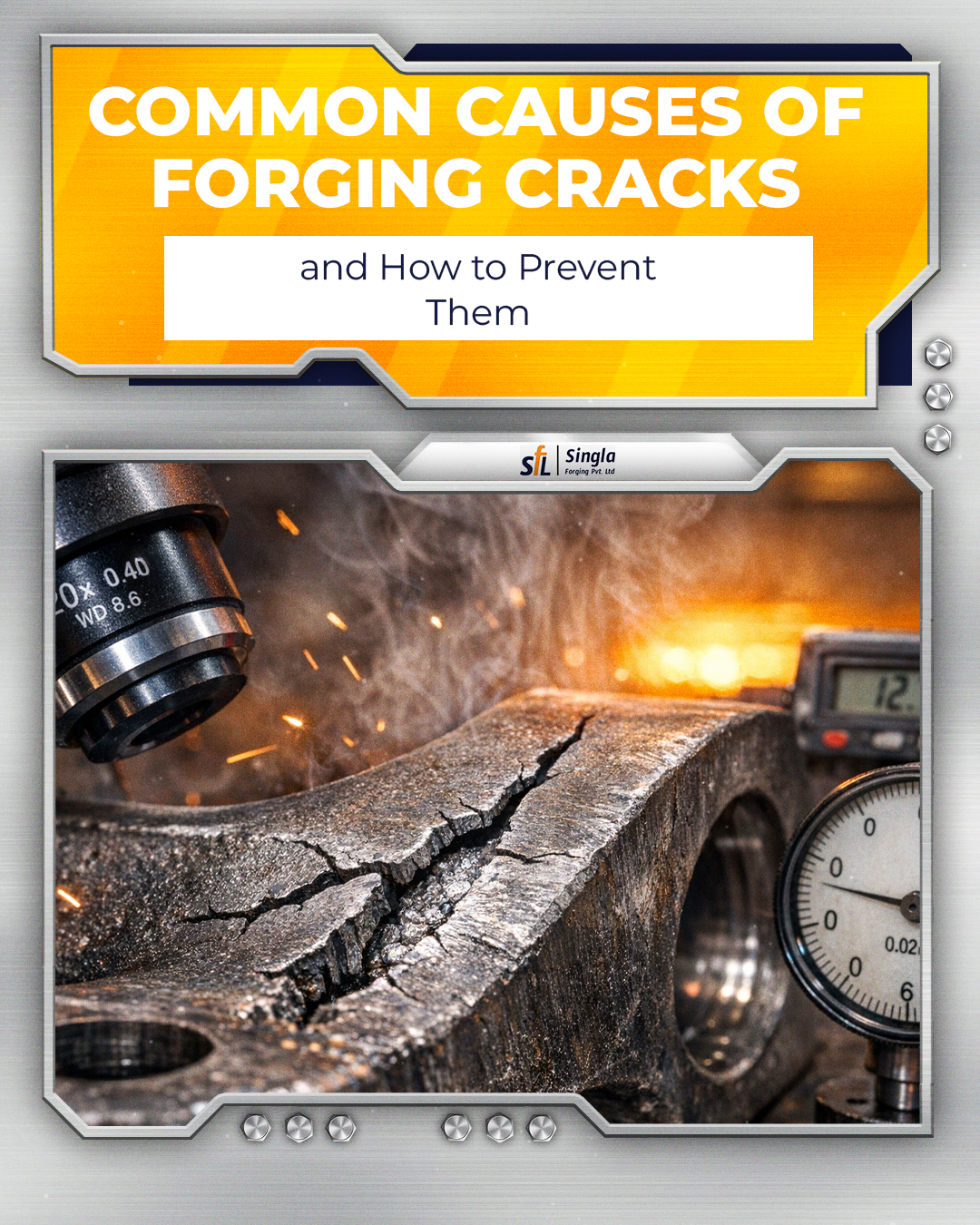
Forging is a premier manufacturing method for producing highly durable metal components. However, even with advanced equipment and skilled handling, forging defects can occur. Among these defects, forging cracks are one of the most serious because they directly affect the structural integrity, durability, and performance of the final product.
Defects like cracks in forged parts can trigger expensive rework, waste raw materials, and stall production timelines. More critically, they risk catastrophic product failure in high-stakes industries like aerospace, automotive, construction, and heavy engineering.
What Are Forging Cracks?
Forging cracks are fractures or splits that develop either during or after the forging process. These cracks can develop either on the surface or deep within the material. Depending on their severity, they can weaken the component and make it unsuitable for use.
Forging cracks are generally classified into two categories:
- Surface Cracks: Visible defects on the outer surface of the forged component.
- Internal Cracks: Hidden fractures within the material structure that may only be detected through non-destructive testing methods.
Identifying the cause early helps manufacturers reduce rejection rates and maintain consistent product quality.
Common Causes of Forging Cracks
1. Improper Forging Temperature
Precise temperature regulation is vital to the forging operation. If the metal is forged below the recommended temperature range, it loses ductility and becomes brittle. As a result, the material cannot withstand deformation and develops cracks under stress.
On the other hand, excessively high temperatures can weaken the grain structure and cause overheating, which also increases the likelihood of cracking.
Prevention:
Applying too much deformation in a single forging stroke can generate extreme internal stress within the material. When this stress exceeds the metal’s ability to deform plastically, the material fractures and forms cracks.
This issue is especially common in complex shapes or when forging high-strength alloys.
Prevention:
Use gradual deformation through multiple forging stages.
Defects present in the raw material often become more severe during forging. Impurities, inclusions, porosity, or uneven grain structure can create weak zones that crack under pressure.
Using substandard billets or improperly processed metal significantly increases the risk of forging failures.
Prevention:
Source high-quality raw materials from reliable suppliers.
4. Improper Die Design
Die design directly affects how the metal flows during forging. Sharp corners, uneven cavity shapes, or poor draft angles can create stress concentration areas where cracks are likely to form.
Inadequate die lubrication can also increase friction, restricting smooth metal flow.
Prevention:
Design dies with proper radii and smooth transitions.
After forging, components often undergo cooling or heat treatment processes. If cooling occurs too quickly, thermal stresses may develop within the material, resulting in cracks.
Improper heat treatment can also alter the material’s microstructure and reduce toughness.
Prevention:
Follow controlled cooling procedures.
Prevention:
Use high-quality lubricants suitable for the forging temperature.
Regularly maintain lubrication systems.
7. Incorrect Grain Flow Orientation
Grain flow is a critical factor in forging strength. If the grain structure does not align properly with the component geometry, stress distribution becomes uneven, increasing the risk of crack initiation.
Prevention:
Design forging processes that promote favorable grain flow.
Importance of Early Crack Detection
Detecting forging cracks at an early stage helps manufacturers minimize production losses and maintain product reliability. Common inspection methods include:
- Visual inspection
- Ultrasonic testing
- Magnetic particle testing
- Dye penetrant inspection
- Radiographic testing
Regular quality checks improve process consistency and reduce the chances of defective products reaching customers.
Conclusion
Forging cracks are a major challenge in metal manufacturing, but most of them can be prevented through proper process control, quality materials, accurate die design, and controlled heat treatment practices.
Manufacturers that invest in optimized forging techniques and strict quality assurance procedures can significantly reduce defects, improve product performance, and increase operational efficiency.
In industries where strength and reliability are critical, preventing forging cracks is not just about reducing waste-it is about ensuring safety, durability, and long-term performance.