AI in Forging Industry: The Future of Precision Manufacturing
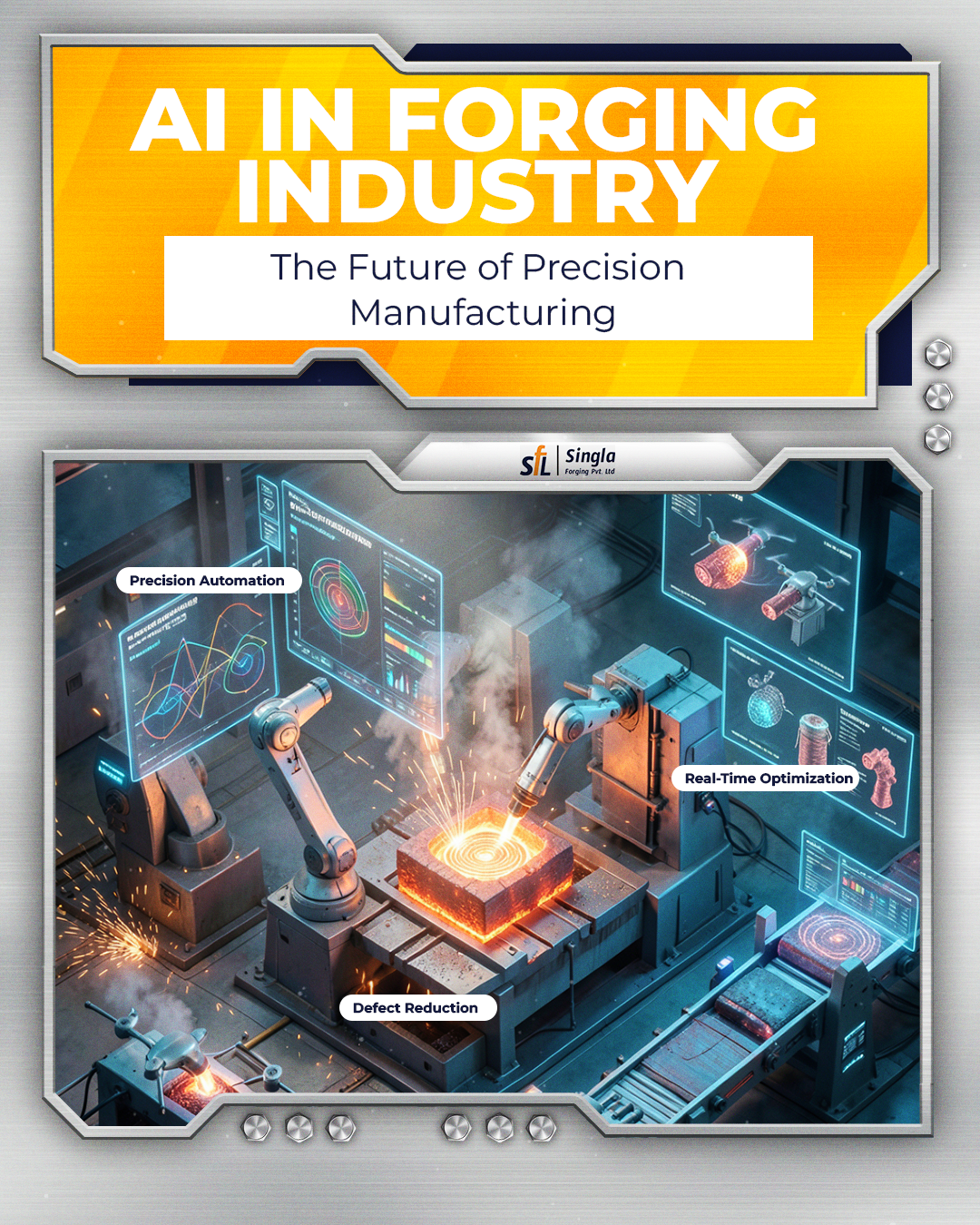
In the age of rapid industrial transformation, the forging sector — a backbone of heavy manufacturing — stands on the cusp of a technological revolution. With demand for higher precision, reduced lead times, and improved cost‑efficiency, artificial intelligence (AI) is no longer just a buzzword; it’s becoming the engine driving the next evolution of forging technology.
At Singla Forging, where quality meets innovation, understanding how AI enhances forging processes is essential to staying ahead in a competitive global market.
Why AI Matters in Forging
Traditionally, forging has relied on skilled craftsmanship, extensive trial‑and‑error calibration, and lengthy production cycles. However, as industries such as automotive, aerospace, energy, and construction increasingly demand components with tight tolerances and superior mechanical properties, conventional methods face limitations.
AI technologies — including machine learning, predictive analytics, and real‑time sensory feedback — are reshaping how forging operations are planned, executed, and optimized.
Key Areas Where AI is Transforming Forging
1. Intelligent Process Optimization
AI algorithms can process vast amounts of data from sensors placed on forging equipment. These smart systems automatically adjust parameters like temperature, strain rate, and press speed, enabling:
- Reduced material waste
- More consistent part quality
- Lower energy consumption
By continuously learning from production data, AI ensures that every batch is better than the last.
2. Predictive Maintenance for Greater Uptime
Machine breakdowns are costly and disruptive. AI‑enabled predictive maintenance analyzes equipment performance patterns to forecast failures before they happen. This means:
- Fewer unexpected shutdowns
- Longer lifespan for critical machinery
- Reduced maintenance costs
Predictive analytics turns reactive repairs into proactive strategies.
3. Enhanced Quality Control Through AI Inspection
Gone are the days of purely manual inspection. By integrating computer vision and deep learning, forging facilities can automate defect detection with unmatched accuracy. AI systems instantly identify surface flaws, dimensional errors, and inconsistencies that might escape the human eye.
With this level of precision, product reliability and compliance with industry standards significantly improve.
4. Supply Chain Intelligence
AI doesn’t just improve production — it streamlines the entire forging supply chain. Intelligent forecasting models optimize inventory, forecast material demand, and reduce lead times. Manufacturers can better adapt to fluctuating market needs while minimizing storage and surge costs.
Real‑World Benefits of AI in Forging
Companies embracing AI in forging operations experience measurable advantages:
- Higher throughput with less resource expenditure
- Improved product consistency across batches
- Shorter delivery timelines due to smarter planning
- Reduced operational risk through data‑driven insights
These benefits not only enhance competitiveness but also support sustainability goals — a growing priority for clients worldwide.
Challenges and the Path Forward
While the benefits of AI are clear, forging manufacturers may face adoption hurdles such as:
- Upfront investment in hardware and software
- Training workforce in digital toolsets
- Integrating legacy systems with modern AI platforms
However, as AI technologies mature and become more accessible, these barriers are rapidly diminishing. The future belongs to manufacturers who combine forging expertise with smart automation.
Conclusion: A Smarter, Stronger Forging Industry
As industries demand higher performance parts with greater precision, AI is redefining the future of forging. From enhancing operational efficiency to ensuring quality excellence, intelligent systems are transforming every step of the manufacturing process.
At Singla Forging, we believe that the convergence of forging craftsmanship and AI innovation will unlock new frontiers in precision manufacturing — driving growth, reliability, and long‑term success.